Sennheiser Momentum 5: What to Expect From the Next Flagship and Whether It’s Worth Waiting
Speculation around the Sennheiser Momentum 5 rests on analysis of the previous generation’s weak spots and market pressure rather than on any verifiable leaks. No FCC filings, no schematics, no official statements from Sennheiser have surfaced as of 2026. The signal from buyers, however, is unambiguous: 51% of SoundGuys readers named improved ANC as their top priority, and the Momentum 4 currently trails Sony’s WH-1000XM5 by roughly 5dB in noise reduction. That gap defines the central task for the next flagship.

Practical verdict: if you’ve been eyeing the Momentum 4 and can find them under $230 on sale, they remain a sensible buy with class-leading battery life. If Sony- or Bose-tier noise cancellation matters to you, wait for the Momentum 5 or look directly at the WH-1000XM6. Paying full $349.95 for Momentum 4 in 2026 no longer makes sense.
When to Expect the Sennheiser Momentum 5 Release Date
Sennheiser doesn’t follow a fixed cadence for the Momentum line, so the only honest starting point is the historical spacing between generations. Momentum 2.0 Wireless arrived in January 2015. Momentum 3 Wireless followed in September 2019 — a gap of four years and seven months. Momentum 4 Wireless launched in August 2022, closing the gap to two years and eleven months. Project that pattern forward and a 2026 release sits inside a plausible window, with spring 2026 as a reasonable midpoint.
A second realistic window is late summer or early fall, since IFA Berlin has historically served as a launch platform for Sennheiser. The brand has used the show for major audio announcements before, and a flagship reveal would fit that calendar.
What’s missing right now is the pre-launch paper trail that usually narrows timing. No FCC filings, no parts leaks, no retailer database entries tied to the Momentum 5 have appeared. In previous cycles across the wireless headphone category, those breadcrumbs typically surface several months before launch. Until something verifiable appears, any specific date should be treated as an informed estimate, not a prediction.
What the Momentum 5 Might Look Like
With no credible renders or supply-chain photos in circulation, design expectations come from two sources: what Sennheiser changed last time, and what owners keep complaining about.
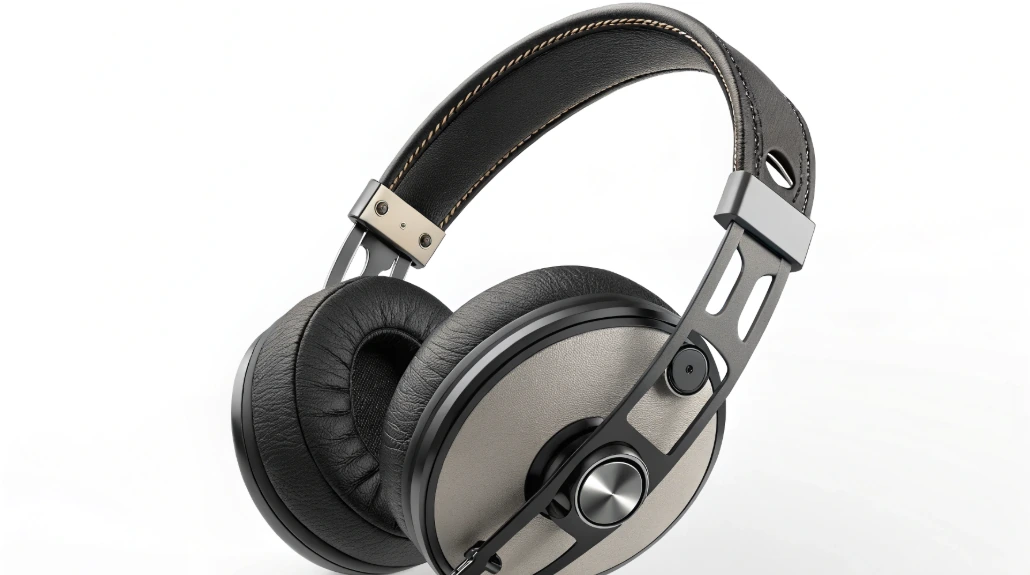
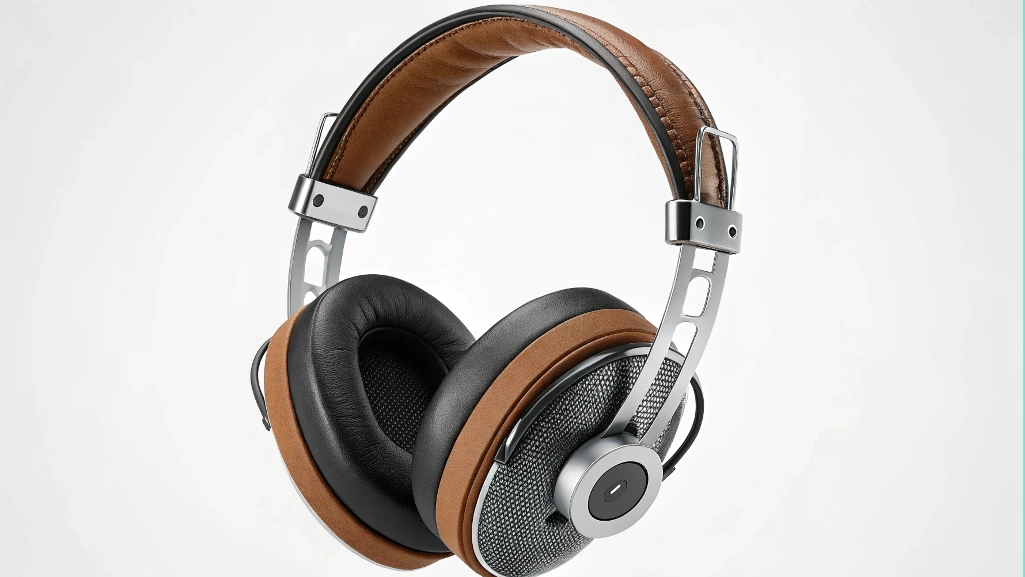
The Momentum 4 moved away from the metal-and-leather construction of the Momentum 3 toward a mostly plastic build. Weight dropped from 320g to 290g, which helped comfort and portability. The trade-off was the most frequent complaint about the line — the headphones no longer feel as premium as they used to at a $350+ price point.
The weight constraint Sennheiser can’t ignore
Returning to denser materials creates a physical problem. Metal frames and thicker padding add weight, and the category has moved in the opposite direction. Sony’s WH-1000XM6 is listed at 254g, and Bose’s QC Ultra 2nd Gen at 264g. With the Momentum 4 already at 290g, there’s almost no room to add luxury materials without losing the comfort and portability comparison outright.
Rumored design changes worth tracking
Some rumor sites have floated thinner ear cups with memory foam, bolder colorways like emerald and burnt orange, and possibly foldable hinges. Among these, foldable hinges would be the most meaningful practical change. The Momentum 4 case is bulky precisely because the headphones don’t fold, and a hinge mechanism would address a real portability complaint. Thinner cups could also help the weight story — provided Sennheiser doesn’t sacrifice passive isolation or long-session comfort, both of which depend on cup depth and clamping force.
Owners on forums have been fairly consistent in what they want: the build feel of the Momentum 3, but with a folding hinge. Whether Sennheiser can hit that combination at a competitive weight is the open question.
Features the Momentum 5 Most Needs to Fix
The pressure on the Momentum 5 comes from two directions — gaps that opened after the Momentum 4 launched in 2022, and inherited weaknesses Sennheiser never addressed. Some of these are easier to close than others.
Noise cancellation is the headline priority
ANC is the clearest priority because it’s both measurable and widely requested. The Momentum 4’s noise cancellation performs well above 1.4kHz, achieving 75–95% reduction in higher frequencies. The problem lives in the sub-bass and midrange — the frequency range where airplane engines, HVAC systems, and street traffic actually sit. There, the gap to the WH-1000XM5 widens to roughly 5dB.
The hardware story explains part of the gap. Sony’s WH-1000XM6 uses 12 microphones with a QN3 processor running about 7x faster than its QN1 predecessor. Bose’s QC Ultra runs 10 microphones with proprietary noise reduction algorithms. Sennheiser’s current system simply doesn’t have the same microphone array or DSP throughput. Closing that gap likely requires more microphones, a more capable chipset, or both — not just firmware tuning.
Codec support and hi-res audio
The Momentum 4 supports aptX Adaptive but skips LDAC, Sony’s hi-res codec that carries roughly 3x more data than standard Bluetooth SBC. At $350+, that omission stands out — competitors now treat broader codec support as baseline. The practical impact for listeners is less about marketing labels and more about headroom: higher-bitrate options preserve more texture in dense mixes and reduce smearing on transient-heavy material, when the source and connection cooperate. This is one of the easier spec-level gaps for Sennheiser to close, since it’s primarily a licensing and firmware decision.
Call quality and connection reliability
Nine percent of polled users flagged weak in-call noise rejection. The Momentum 4 microphones struggle to separate voice from environmental noise, which becomes visible the moment you take a call on a busy street or in a café. A separate nine percent of users wanted more reliable auto on/off behavior — not a headline feature, but the kind of daily detail that decides whether a $400 product feels premium or just expensive.
Bluetooth 5.4 and LE Audio
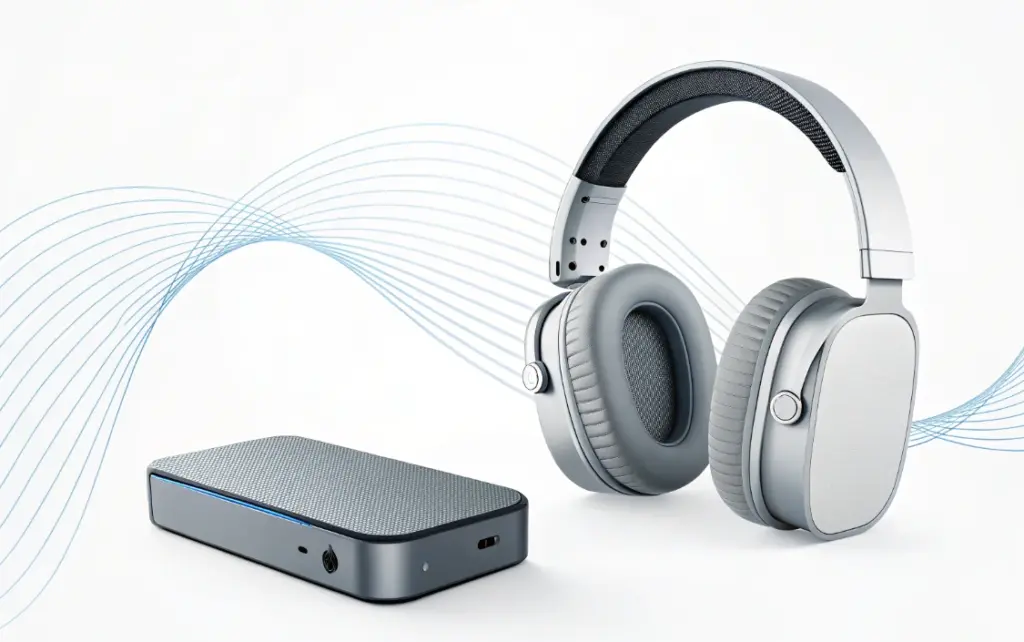
One rumor report suggests the Momentum 5 could adopt Bluetooth 5.4. If true, the gains would show up as more stable connections, better power efficiency, and a clearer path to LE Audio features like Auracast — the multi-device audio broadcast standard JBL already implements on the Tour One M3. None of this dramatically changes day-to-day use today, but it future-proofs the headphones against features that will become standard over the lifecycle of a flagship purchase.
Battery life — the lead worth protecting
Where competitors chase grams and microphone counts, Sennheiser holds one decisive advantage. The Momentum 4 delivers 56 hours and 21 minutes with ANC on — nearly double Sony’s 30 hours and well ahead of Bose’s 24. Only JBL’s Tour One M3, at 55 hours 37 minutes, comes close. Sennheiser has every incentive to defend this margin aggressively, because it’s the one specification no rival can match without rethinking battery capacity at the expense of weight.
Sound tuning and personalization
The Momentum 4 already has a strong reputation for sound quality among mainstream reviewers, so the “sound upgrade” story is more likely refinement than reinvention. The realistic path is software — Sennheiser has been actively expanding its Smart Control app with personalization features and guided EQ tools like Sound Check. Reports suggest parametric EQ support has appeared on newer Sennheiser models built on the same platform. Expect software-side upgrades focused on EQ depth, DSP consistency, and user-tailored tuning rather than a new driver story.
How Much the Momentum 5 Will Likely Cost
The Momentum 4 tells a pricing story Sennheiser would rather not highlight. They launched at $349.95 and now regularly drop below $230 on sale. Discounts that steep suggest the market decided the original price was too high for what the headphones delivered against competitors.
A reasonable estimate for the Momentum 5 is $399–$449, which puts it in crowded territory. Sony’s WH-1000XM6 sits at $449.99, Bose’s QC Ultra 2nd Gen at $449, and JBL’s Tour One M3 at $399.95. At parity pricing with Sony and Bose, Sennheiser can’t rely on brand loyalty or battery life alone. The new flagship would need to deliver real fixes where the Momentum 4 fell short — primarily ANC and consistent day-to-day polish — while protecting the runtime advantage that still separates it from the pack.
What to Watch Before Buying
For anyone considering the Momentum 5, three signals are worth tracking before committing. First, watch for FCC filings or retailer database entries — those typically precede launch by two to four months and are the most reliable timing indicator. Second, look for independent ANC measurements once review units ship, not Sennheiser’s own marketing claims; the sub-bass and midrange reduction figures are what actually matter for travel and commuting. Third, check the launch price against the Momentum 4’s discount trajectory — if Sennheiser launches at $449 while the Momentum 4 sits at $200, the value math depends heavily on how meaningful the ANC and call-quality fixes turn out to be.
If you need new headphones now and the Momentum 4’s noise cancellation is acceptable for your use case, there’s no reason to wait. If ANC is the deciding factor, either the WH-1000XM6 or a patient wait for verified Momentum 5 reviews is the better path.